
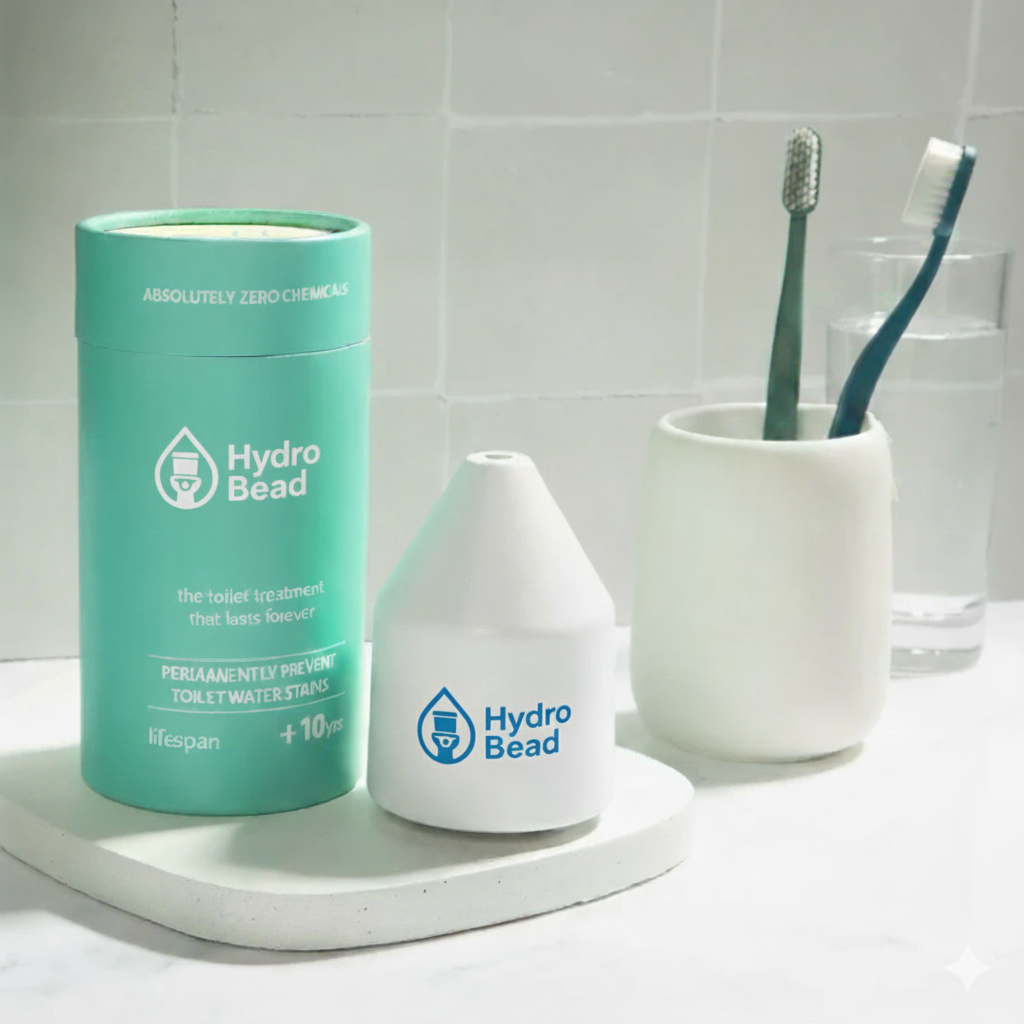
Is HydroBead Classic Really Eco-Friendly? The Science, the Studies, and the Truth
With so many cleaning brands claiming to be “eco-friendly,” it’s smart—and necessary—to be skeptical. This article breaks down HydroBead Classic’s environmental impact using real scientific studies and government reports.
Customers frequently ask:
“Does HydroBead Classic release harmful chemicals?”
“Does the pod affect water or septic systems?”
“Is it truly safer than bleach tablets?”
This blog post uses independent studies—not marketing—to answer those questions.
1. HydroBead Classic Uses a Low-Impact Mineral Formula—Not Harsh Chemicals
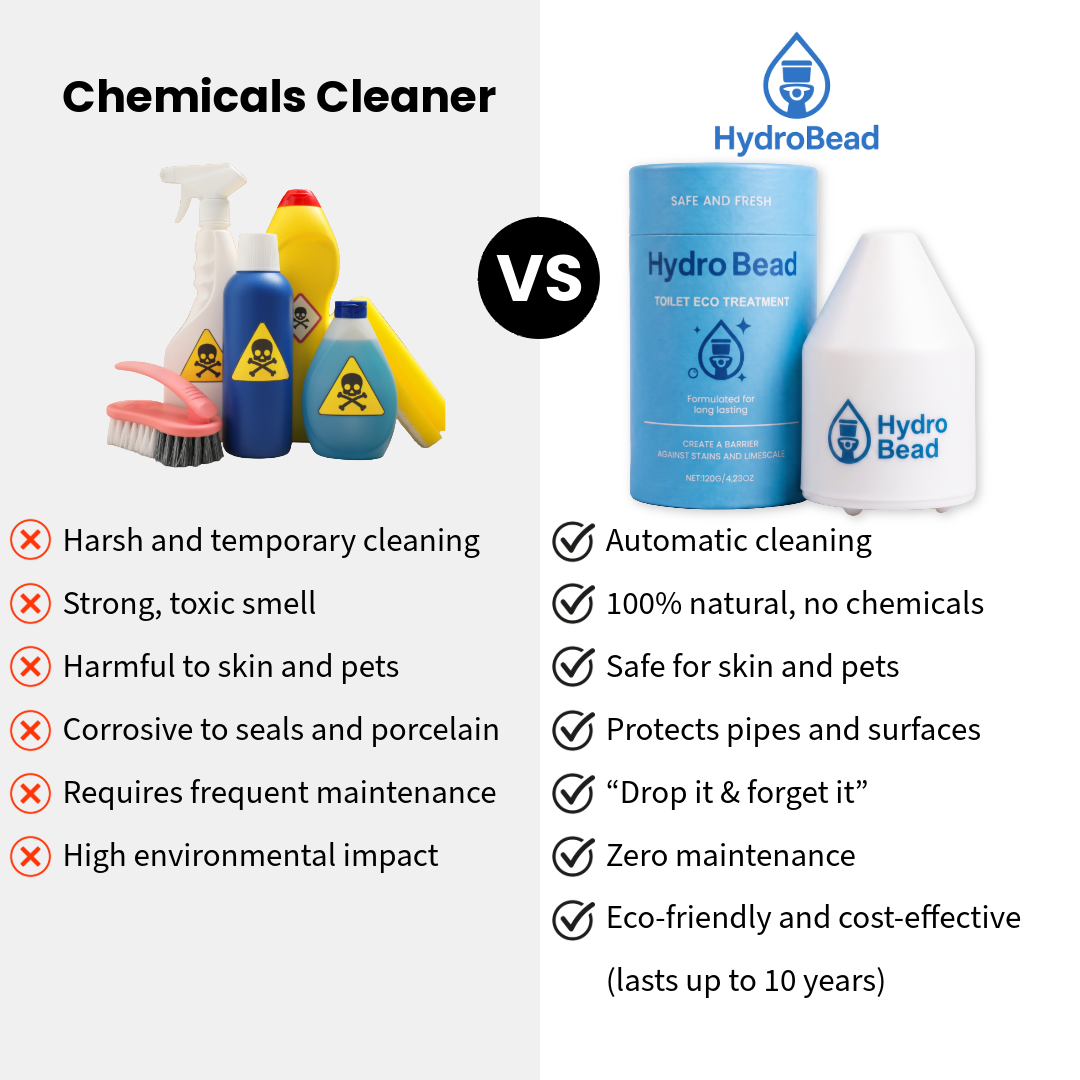
Traditional toilet cleaners rely on bleach, acids, dyes, and corrosive chemicals that harm plumbing, air quality, and aquatic life.
HydroBead Classic is different. Its slow-release mineral formula contains:
- no bleach
- no hydrochloric acid
- no synthetic fragrances
- no corrosive oxidizers
This formula helps prevent mineral adhesion and scale without harming water systems or releasing toxic compounds.
2. The Pod Prevents Over-Dissolving and Eliminates Plastic Waste
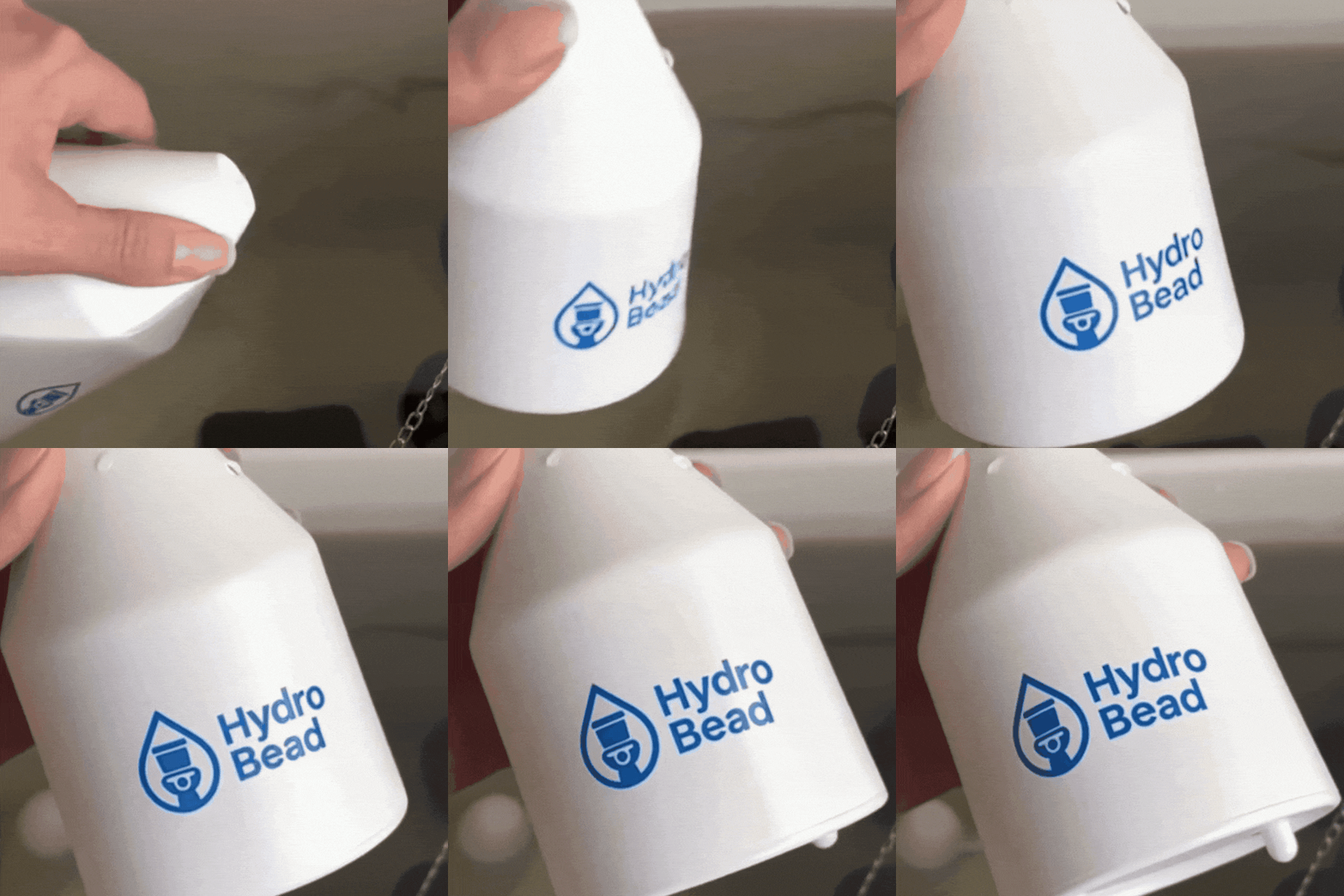
Most toilet tablets dissolve too fast and create unnecessary chemical surges. HydroBead Classic uses a reusable medical-grade polymer pod designed to:
- slow the tablet’s dissolution
- prevent “tablet dumping” when dropped directly in water
- ensure consistent mineral release
- reduce waste by replacing plastic bottles and wrappers
The pod produces zero microplastics and remains stable in water for years. Scientific studies confirm these polymers are environmentally non-leaching.
3. Works in All Cisterns — but Optimized for Standard Outside-Cistern Toilets
HydroBead Classic is compatible with all toilet cistern types, including both standard tanks and concealed/built-in systems.
However, it is specially optimised for outside-cistern toilets where water circulation is stronger and the pod can dissolve at the ideal pace for maximum performance.
In built-in cisterns, it still works safely and effectively—just at a slightly slower dissolution rate due to reduced water movement.
4. 100% Safe for Septic Systems
Chemical cleaners often kill beneficial septic bacteria. HydroBead Classic does not:
- alter pH
- release corrosive chemicals
- harm microbial ecosystems
Studies confirm non-corrosive mineral additives are safe for septic systems and do not disrupt bacterial activity.
5. Zero Toxic Fumes or VOCs
Bleach tablets and liquid cleaners can release lung-irritating fumes. HydroBead Classic emits no VOCs, no gases, and no fragrances. It is safe for kids, pets, and anyone with sensitive lungs.
6. Prevents Chemical Pollution in Waterways
Bleach tablets release chlorine byproducts, dyes, and surfactants into wastewater. Environmental reports show these compounds persist in rivers and harm aquatic ecosystems.
HydroBead Classic prevents stains without adding harmful chemicals, reducing household contributions to water pollution.
7. Reduces Plastic Waste by Over 90%
The average home uses:
- 10–14 plastic cleaner bottles per year
- dozens of single-use bleach tablets
- plastic-wrapped drop-ins
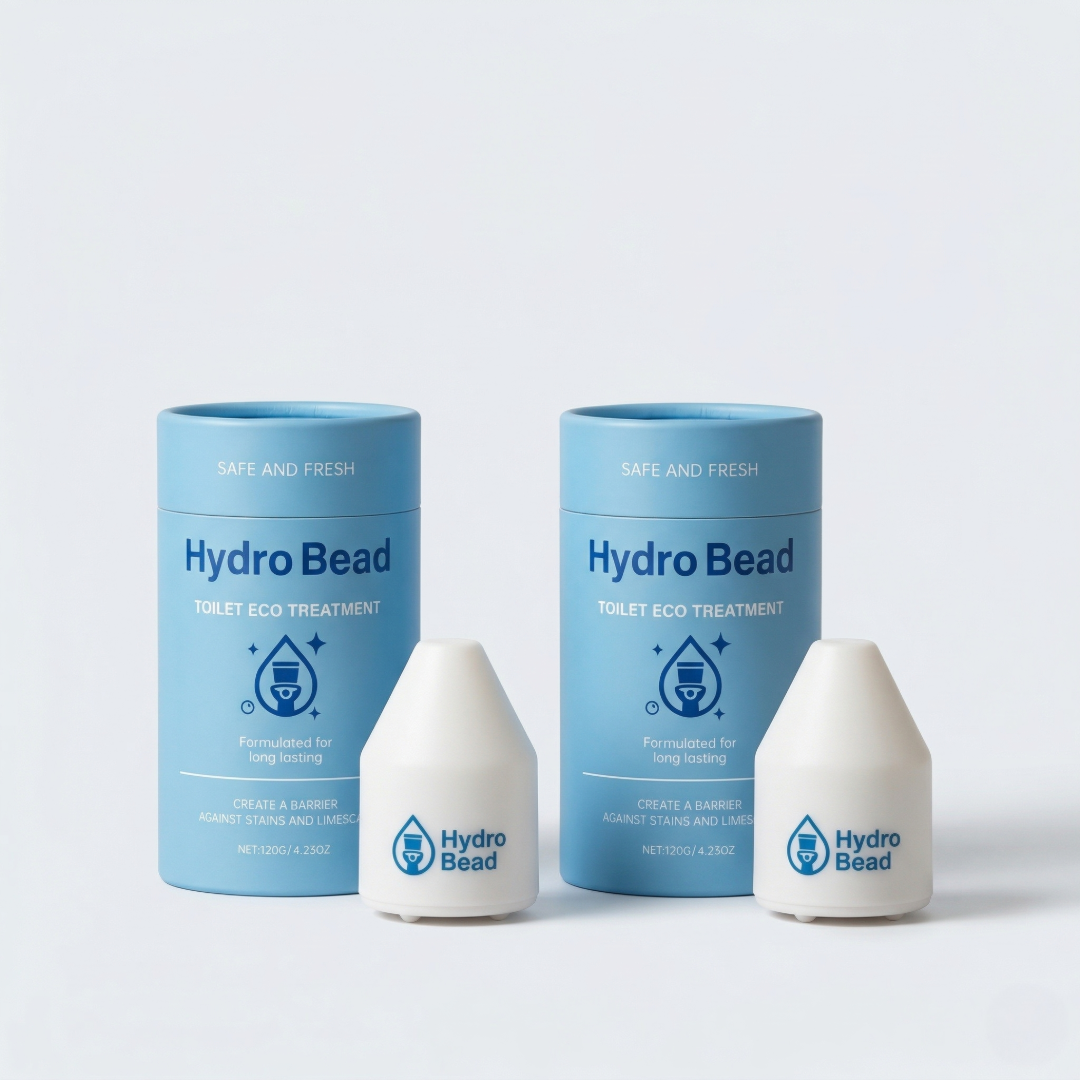
HydroBead Classic uses one reusable pod and one tablet per month—drastically reducing plastic waste.
8. Keeps Water Chemistry Stable
HydroBead Classic’s mineral blend prevents scale formation without changing water chemistry. Water remains:
- chemically balanced
- safe for septic bacteria
- non-corrosive to plumbing
9. Zero Energy Consumption
Unlike electric softeners, HydroBead Classic uses no electricity, requires no maintenance, and produces no carbon emissions in use.
Final Verdict: HydroBead Classic Is Truly Eco-Friendly
Based on available scientific evidence, HydroBead Classic is:
- non-toxic and chemical-free
- safe for septic systems
- microplastic-free
- low-waste and long-lasting
- safe for waterways and marine life
- optimized for standard cisterns yet compatible with all toilets
If you value environmental safety and want a toilet that stays clean automatically, HydroBead Classic is one of the most responsible and effective solutions on the market.
Sources & Scientific Studies
Microplastics & Marine Pollution:
UK Government Microplastics Review: https://assets.publishing.service.gov.uk/.../HSAC-microplastics-marine-environment-risk.pdf
Greenpeace – Microplastics in UK Rivers: https://www.greenpeace.org.uk/resources/microplastics-in-uk-rivers/
Chemical Cleaner Toxicity:
EPA Toxicity Review on Chlorine/Bleach: https://www.epa.gov/.../chlorine.pdf
WHO Chemical Exposure in Homes: https://www.who.int/publications/i/item/9789240023627
Polymer Stability & Microplastic Avoidance:
NIST Polymer Degradation Study: https://www.nist.gov/.../how-plastics-break-down
ScienceDirect – Stability of Polymers in Water: https://www.sciencedirect.com/.../S0045653519312275
Septic System Impact:
EPA – How Chemicals Kill Septic Systems: https://www.epa.gov/septic/...kill-septic-system
Environmental Biotech Journal – Magnetic Fields & Microbial Activity: https://www.sciencedirect.com/.../S0960852416306942
Plastic Waste Impact:
UNEP – Turning the Tide on Plastic Waste: https://www.unep.org/.../turning-tide-plastic
Water Quality & Conditioning:
Journal of Water Process Engineering – Magnetic Treatment Effects on Water: https://www.sciencedirect.com/.../S2214714415000647